-
Gastein Valley
-
Ski & Mountain
-
Health & thermal spas
-
Experiences & Events
-
Service
-
My Gastein experience




Factors Contributing to the Healing Properties of Natural Resources: Forests and Water

EU Interreg Research Project WiWa²
How can forests and water support our health?
The cross-border EU research project WiWa² addressed this question . In collaboration with Paracelsus Medical University Salzburg (PMU), research was conducted in Bad Hofgastein and elsewhere to investigate how targeted exercise in the forest affects people with chronic back pain.
The results show that nature-based therapy programs can be a valuable complement to traditional rehabilitation. This research thus provides new insights into the connection between health, nature, and sustainable tourism in Gastein.
WiWa² stands for “EffectiveFactorsof the Natural Healing Resources of Forestsand Waterfor Improving Health and Quality of Life as a Tourist Contribution to Sustainable Habitat Development.”
The cross-border research project was implemented as part of the EU’s Interreg Bavaria–Austria funding program.
Project Details
-
Project Duration: January 2023 to December 2025
-
Project code: BA0100027
-
Funding Program: Interreg VI-A Bavaria–Austria 2021–2027
-
Project budget: approximately €875,000
Project Partners
-
Paracelsus Private Medical University of Salzburg – Institute for Ecomedicine (Lead)
-
Ludwig Maximilian University of Munich
-
Innovation Salzburg GmbH
-
Bad Hofgastein Spa and Tourism Association
-
German Pension Insurance Bavaria South – Bad Füssing-Passau Rehabilitation Center
Study: Exercising in the Forest Has Long-Term Benefits
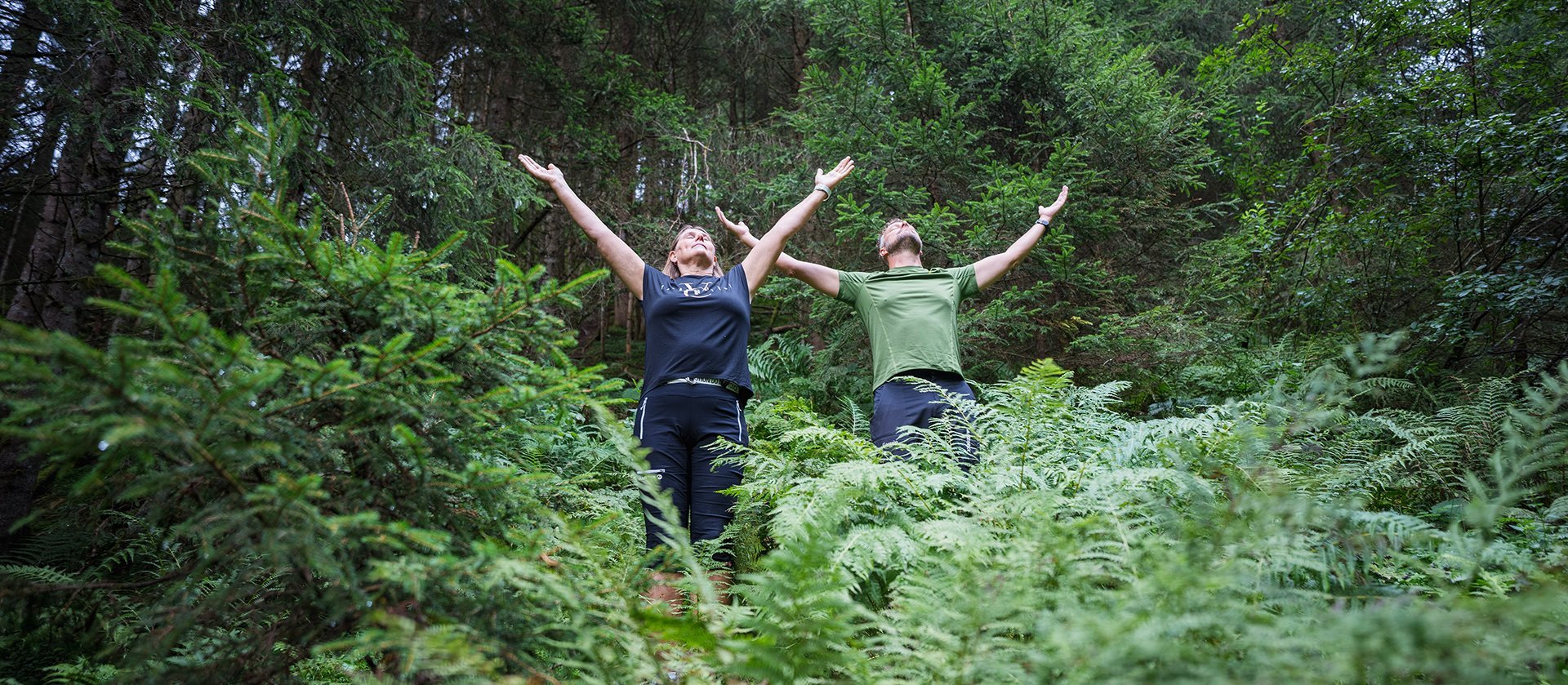
As part of the WiWa² study, researchers investigated whether incorporating forest therapy and green exercise—targeted physical activity in nature —could improve rehabilitation for chronic back pain.
The clinical study in Bad Hofgastein yielded promising results: Both traditional rehabilitation and the outdoor program showed positive effects. However, certain improvements were more long-lasting in the outdoor group.
The key study findings:
-
Improved mobility: Positive changes in posture and spinal mobility.
-
Better balance and confidence in movement: Improvements in balance and a reduction in anxiety-related avoidance of movement.
-
Longer-lasting pain relief: The reduction in pain at rest persisted in some participants of the outdoor program for up to 180 days after rehabilitation.
The results underscore the potential of nature-based therapies as a complement to established rehabilitation programs.
This is how the forest's impact was studied
Sixty men between the ages of 18 and 65 with chronic, nonspecific back pain participated in the clinical study in Bad Hofgastein.
All participants completed a two-week “Health Prevention Active” (GVA) program. While one group followed the traditional indoor rehabilitation program, the second group had some of their sessions replaced with structured outdoor activities.
The program combined forest therapy with green exercise. In addition to physical activity, the program focused on conscious awareness of nature and mindfulness-based elements.
The participants were assessed during and after rehabilitation to identify both short-term and long-term changes.
Forests and Water as Natural Health Resources
Forests, bodies of water, and alpine landscapes offer a wide range of opportunities for physical activity, recreation, and rejuvenation. The WiWa² research project investigated how these natural resources can be specifically utilized to create health-promoting programs.
The focus was on three areas of research:
- the analysis of suitable natural areas
- the scientific study of nature-based therapies
- and the development of sustainable health programs for visitors and locals
The goal: to better understandthe health benefits of nature and, based on this understanding, develop programs that combine medical insights with responsible stewardship of the landscape.
Scientific Analysis of Gastein's Natural Areas
In addition to the clinical study, the WiWa² project examined six selected landscape areas in the Gastein Valley for their health-promoting potential:
- Dorfgastein, Dorfer Wald – Patzberg
- Bad Hofgastein, Feichteralm – Sepp Poesie Trail
- Bad Hofgastein, Vogeltenn
- Bad Hofgastein, Bird Education Trail – Kneipp Trail
- Bad Hofgastein, Stubnerkogel Center
- Bad Gastein, Hardtweg
Factors evaluated included the quality of the forests, existing bodies of water, the landscape’s recreational value, and general health-promoting factors such as tranquility, climate, and accessibility.
The results were documented in so-called potential maps . These maps show which landscape areas might be particularly suitable for the development of nature-based health programs. Aspects of nature conservation and potential conflicts of use were also taken into account.
What Research Means for Gastein
The results of the WiWa² project lay the groundwork for the further development of health tourism in Gastein.
Possible examples include therapeutically guided forest retreats, green exercise programs, or health-promoting activities that combine targeted physical activity with mindful regeneration in nature.
At the same time, the sustainable use of natural resources is a central focus. Nature-based health offerings should not only benefit people but also be compatible with the protection of sensitive landscapes.
In this way, Gastein combines its tradition as a health destination with new scientific findings and creates opportunities for the further development of modern health offerings.
Additional Information and Research Findings
More detailed information on the natural landscape analysis, sustainable service development, and the results of the research project is available in the project publications.
Guide to Sustainable Habitat Development (PDF)